
Should You Wait for Lower Interest Rates to Buy in Seattle? | Magnolia Real Estate
If you’re waiting for interest rates to come down before buying a home, you’re making a reasonable calculation. The cost of borrowing matters, and a lower mortgage rate can have a meaningful effect on a monthly payment and the total cost of a loan.
The problem is that interest rates are only one variable in a home purchase.
A buyer who waits for a better rate is also waiting for a particular set of market conditions to come together. Meanwhile, the price of the home, the seller’s willingness to negotiate, the condition of the property, and the financing terms available to the buyer can all change.
Why Buyers Focus on Interest Rates
Interest rates are easy to understand and easy to compare. You can look at a mortgage rate today and compare it with a rate from six months ago. The effect on a monthly payment is relatively straightforward to calculate.
That makes rates feel like the variable you should be waiting on.
There is also a natural assumption that lower rates will automatically make buying a home more attractive. But lower rates can affect more than the cost of borrowing. If rates fall enough to bring more buyers into the market, competition can increase as well. More buyers competing for the same homes can put upward pressure on prices and reduce a seller’s willingness to negotiate.
So the decision is not simply about whether rates are higher or lower.
What’s Actually Being Negotiated

A home purchase has several financial variables, and some of them are negotiable.
The purchase price is one. A buyer may be able to negotiate below the asking price depending on the property, its time on the market, competing interest, and the seller’s circumstances.
Inspection items are another. After an inspection, there may be an opportunity to negotiate repairs, credits, or other concessions. The amount of leverage depends heavily on the condition of the home and the terms of the transaction.
Financing costs can also be part of the negotiation. In some situations, a seller may contribute toward closing costs or other expenses. A buyer may also have different loan structures available depending on their circumstances.
None of these are guaranteed. They are simply part of the broader negotiation.
That matters because a buyer could potentially pay a little more in interest while getting a better overall purchase price or meaningful concessions elsewhere.
The Real Decision
The real decision is not necessarily, “Should I buy now or wait for lower rates?”
It is closer to: Which combination of price, financing cost, property condition, and terms makes sense for me?
That is a much more complete way to evaluate the purchase.
For example, imagine two buyers purchasing similar homes. One buys when mortgage rates are lower, but competition is stronger and the seller has little reason to negotiate. The other buys when rates are higher but negotiates the purchase price, gets inspection-related concessions, and receives help with certain financing costs.
The second buyer may not have gotten the better interest rate, but they may have gotten a better overall transaction.
That does not mean the second buyer necessarily made the better decision either. The numbers have to work for the individual buyer. It simply shows why looking at the interest rate in isolation can leave out important information.
How It Plays Out Over Time
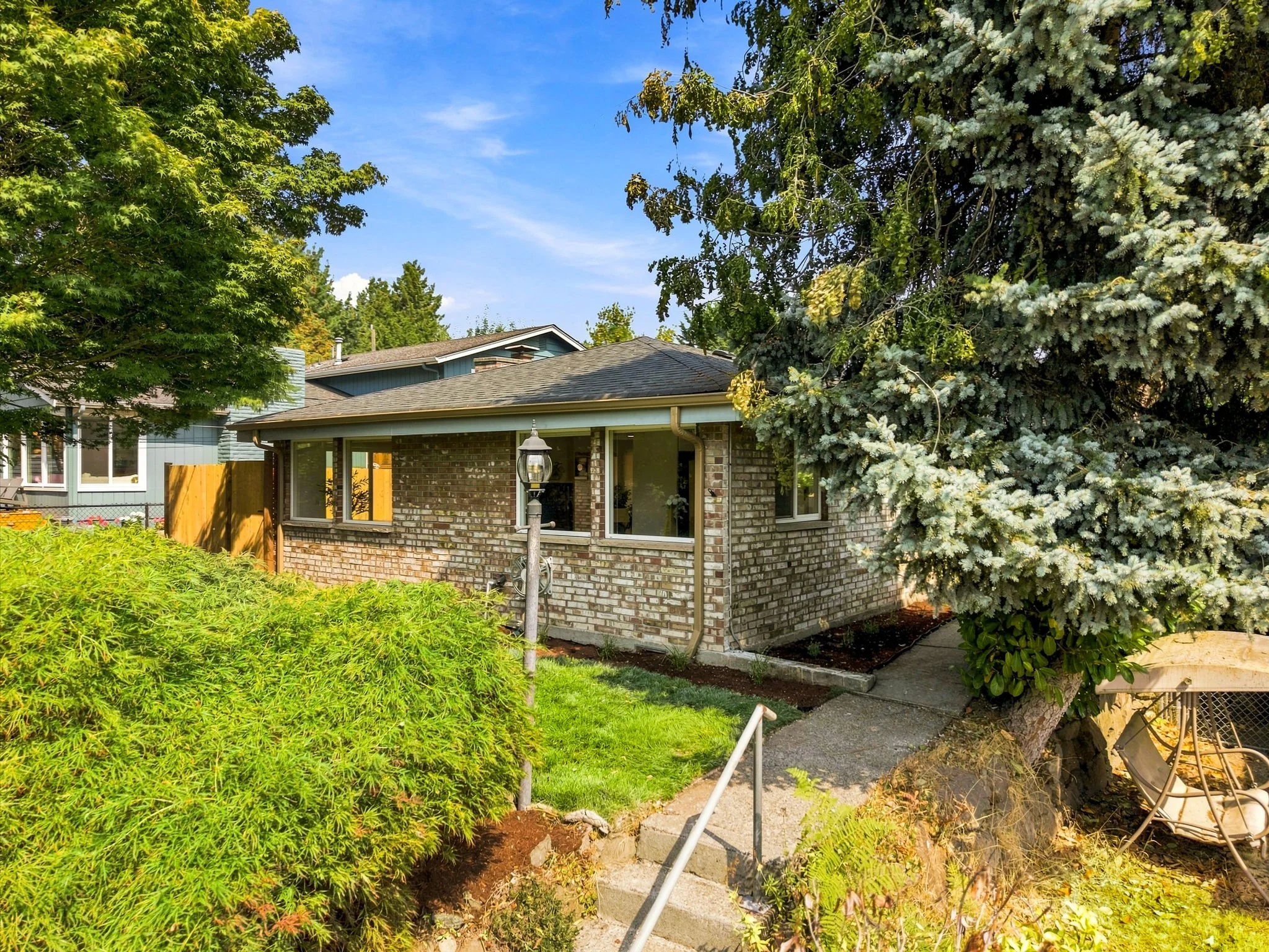
One pattern I see in Seattle real estate, including here in Magnolia, is that buyers can become very focused on getting one variable exactly right. They wait for the rate, the price, or the “perfect” moment in the market.
The difficulty is that markets rarely cooperate by improving every variable at the same time.
In a neighborhood like Magnolia, the dynamics can be particularly property-specific. Two homes can be relatively close to each other but have very different levels of buyer demand depending on condition, location within the neighborhood, price, and how the home compares with other available properties.
A period of lower interest rates may come with higher prices or more competition. A period of higher rates may create more negotiating room. A home that has been sitting on the market may offer a buyer more leverage than a comparable home that has just received multiple offers.
There is another consideration: financing can change over the life of the home, while the purchase price becomes part of the transaction immediately. Refinancing may be possible in the future if rates change, although there is never a guarantee that rates will fall or that refinancing will make sense.
The purchase price, however, is not something you can refinance away later.
When Waiting Makes Sense—and When It Doesn’t
Waiting for lower rates can make sense if the current financing cost makes the purchase uncomfortable or financially unsustainable. There is no reason to force a purchase simply because a particular home is available today.
It can also make sense to wait if the buyer’s broader financial situation is not ready for homeownership.
The problem comes when a buyer is financially prepared to purchase but treats a future interest-rate decline as the only condition that matters. That can cause them to overlook opportunities to negotiate on price, inspection items, or financing costs.
The strongest decisions tend to come from looking at the entire transaction rather than trying to predict one variable.
Interest rates matter. So do purchase price, property condition, seller concessions, financing structure, and the buyer’s own financial position.
In real estate, timing the market is difficult because you never control all of the variables. A more practical approach is to understand which variables you can actually negotiate and evaluate the complete cost of the purchase.
